
Temporary Admission & Customs for Oil & Gas Equipment in Egypt
Reviewed by Max Marine Operations
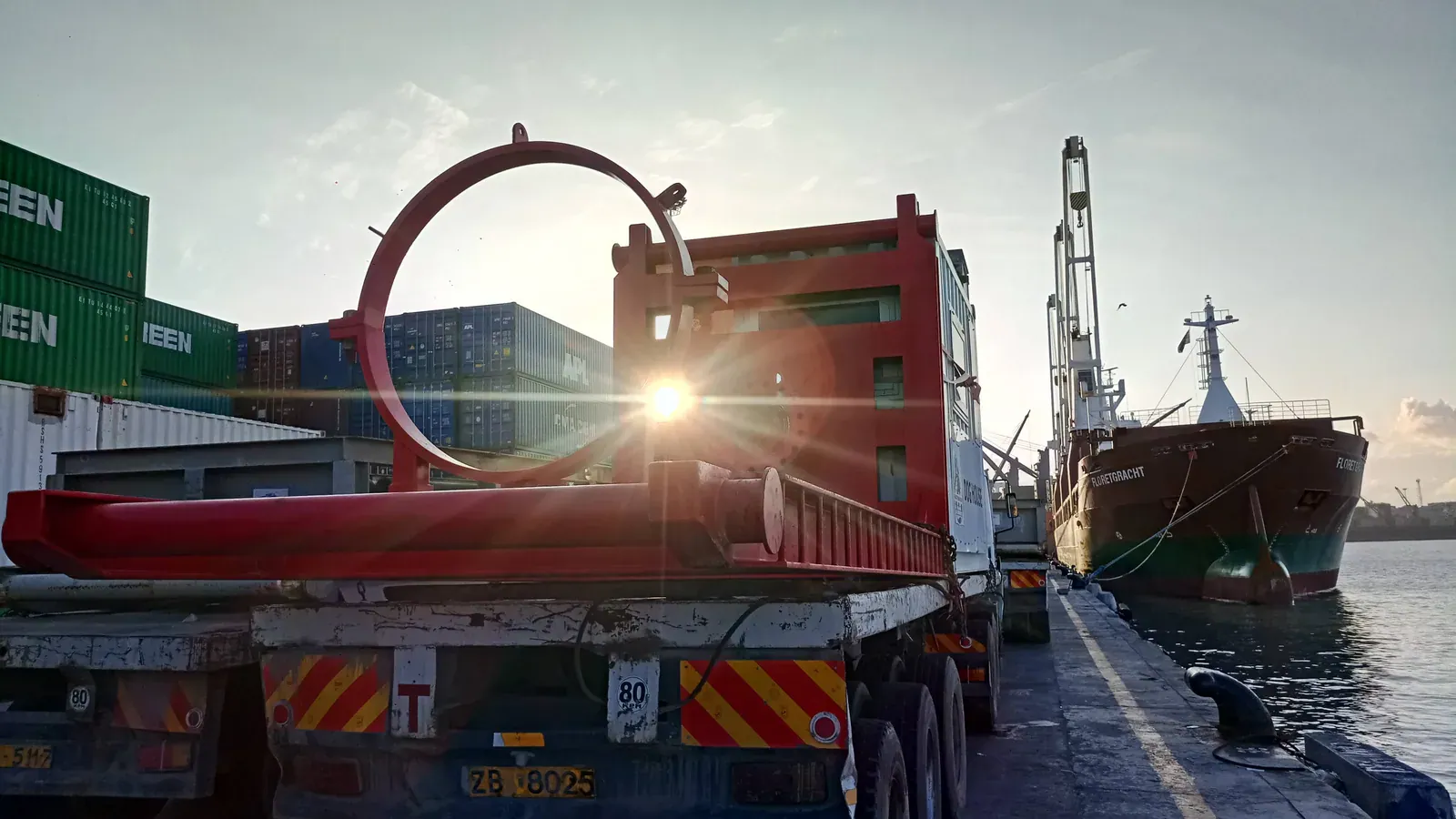
Offshore and drilling equipment coming into Egypt for a defined project rarely needs to be permanently imported, and paying full import duty on a rig package that leaves again would be a costly mistake. Egypt's temporary-admission regime is built for exactly this, but it runs on paperwork, and the paperwork is where projects lose time.
What temporary admission actually does
Temporary admission lets equipment enter Egypt for a specific project and period without paying full import duties and taxes, on the condition that it is re-exported when the work is done. For drilling contractors, EPC teams and offshore operators, it covers rigs, tools, subsea structures, spares and project cargo that are in-country for a campaign rather than a sale. Handled correctly, it protects the project's cash flow; handled late, it holds equipment at the port.
Supply covers, the part outsiders miss
In Egypt's petroleum sector, equipment often enters under a company's customs "supply cover", a temporary-admission umbrella tied to a concession or operator. The complication comes when a rig or a package of equipment finishes one operator's scope and moves to another's. Done the obvious way, that means re-exporting and re-importing the equipment. Done correctly, the supply cover is transferred from one company to another and the equipment stays in-country, saving weeks and significant cost. This transfer is niche, document-heavy work, and it is exactly the kind of thing a contractor discovers they need mid-campaign.
Free zones and re-export
For equipment and cargo that will move in and out repeatedly, free-zone handling and bonded storage give another route, goods sit under customs control without entering the domestic market, then re-export when required. Between temporary admission, supply covers and free-zone procedures, most offshore equipment movements in Egypt can be structured to avoid unnecessary duty, provided the regime is chosen before the equipment arrives.
Exporting under an Egyptian registration
Exporting goods out of Egypt requires the exporter to hold an Egyptian Exporters' Registry registration. A client without one can export under an established agent's registration instead of setting up their own, useful for a one-off project movement or a contractor without a local trading entity.
Getting it right before the equipment lands
The theme across all of this is timing. Temporary admission, supply covers, free-zone routing and re-export are all far cheaper and faster when the regime is decided before arrival and the documentation is prepared in advance. Coordinated directly with EGPC and the operating companies, the whole customs file can move as one, rather than as a series of separate errands while equipment sits at the quay.
Bringing equipment into Egypt for a project?
Tell us the equipment, the operator and the timeline. We'll structure temporary admission, supply covers or free-zone routing to keep duty and delay down.
Common questions
Related guides
Related services